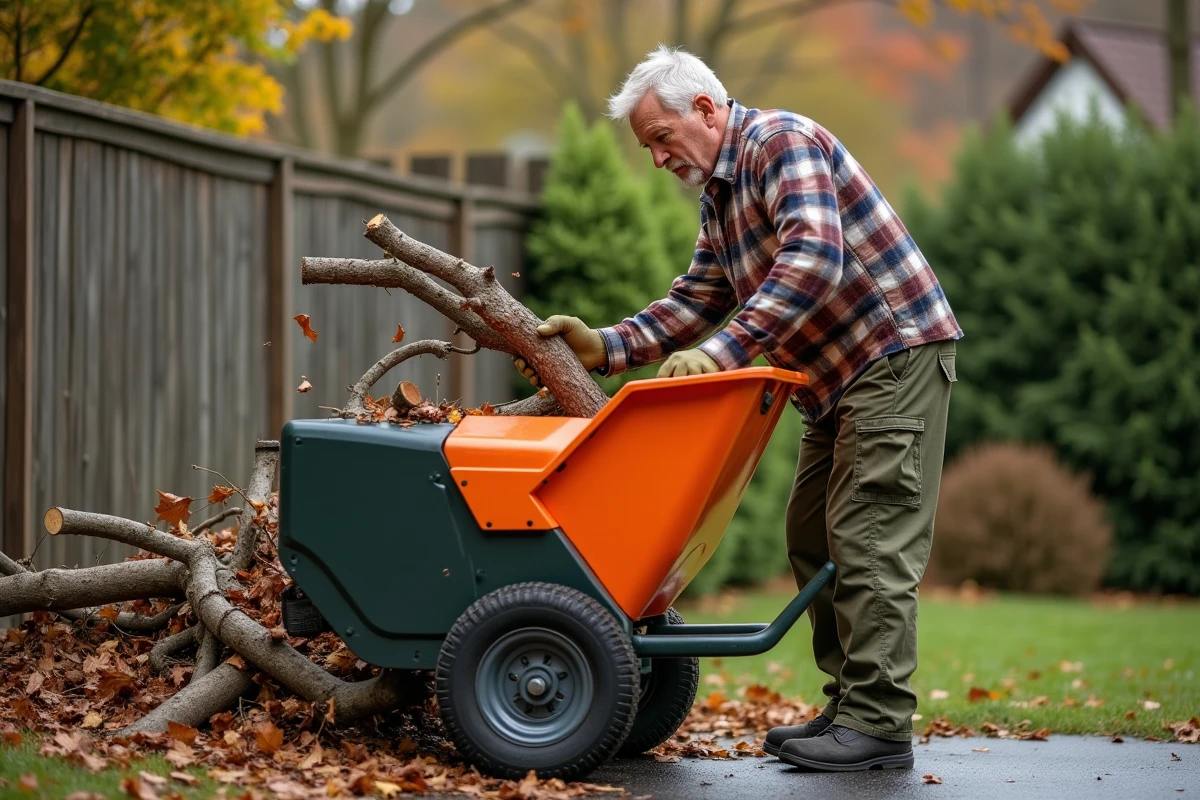
The cutting system determines the particle size of the mulch, maintenance, and actual throughput capacity. Before comparing engine powers or brands, this mechanism should be prioritized first.
Shredding System: Rotor, Turbine, or Blades
A blade shredder (or rotating plate) slices branches by impact. The result is coarse, fibrous mulch, suitable for surface mulching. The noise generated is high, and the blades dull quickly on hard or dry wood.
The knife rotor crushes and shears simultaneously. It accepts larger branch diameters, produces more homogeneous mulch, and jams less often. Its lower rotational speed reduces noise levels.
The turbine combines the advantages of the rotor with a drive mechanism that pulls the branch towards the cutting area. We recommend this system for gardens that generate regular volumes of green waste, as it minimizes jams and speeds up work. The comparator available on broyeur-vegetaux.net allows filtering models by cutting type, simplifying the pre-selection process.
Electric or Gas Engine: Real Selection Criteria
The debate between electric and gas often boils down to raw power. This is a mistake. The determining criterion is the maximum branch diameter accepted relative to the frequency of use and the distance between the shredder and the pruning area.
An electric shredder is suitable for the majority of residential gardens. It starts instantly, requires no engine maintenance (no oil changes, no spark plugs), and operates without local emissions. The limitation remains the power cord and the maximum branch diameter, which is generally more modest than that of a gas model.
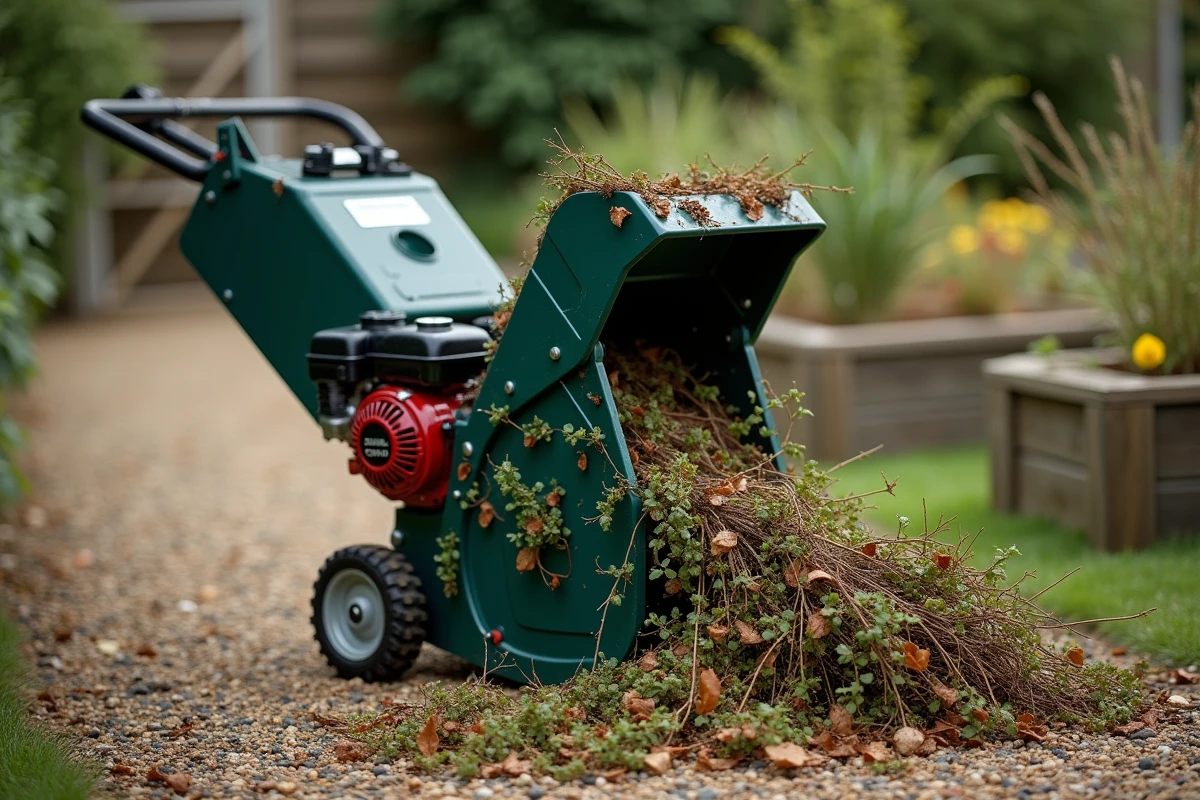
The gas shredder makes sense in large areas, far from any outlet, or for shredding large diameter branches. Its gasoline engine delivers higher torque, but the bulk, weight, and maintenance costs increase proportionally.
- Urban or suburban garden with hedges and shrubs: an electric rotor shredder covers nearly all needs.
- Wooded area or orchard with regular pruning of large diameters: gas is justified by the engine torque and autonomy.
- Occasional use (once or twice a year): a basic electric model is sufficient; the extra cost of a gas model is not justified.
Engine Power and Branch Diameter: Reading the Right Specifications
Manufacturers display power in watts (electric) or cubic centimeters (gas). Power alone does not predict effective cutting capacity. Two electric shredders of identical power can accept very different branch diameters depending on the cutting system and the design of the hopper.
We observe that the maximum diameter advertised often corresponds to fresh, soft wood. On dry wood or hard species (oak, hornbeam, olive), a lower actual diameter should be expected. The best practice is to choose a shredder whose advertised diameter exceeds the average diameter of the branches you are pruning by at least one third.
Engine Torque and Rotational Speed
A motor that runs fast with low torque easily jams. Conversely, a lower speed combined with high torque maintains cutting speed under load. This is why rotor or turbine shredders operate at reduced speeds compared to blade models while handling larger sections.
On recent electric models, some integrate electronic torque management that adjusts speed based on material resistance. This function reduces jams and protects the cutting mechanism.
Quality of Mulch and Valorization of Green Waste
Mulch is not a by-product. It is a direct resource for the garden, provided its particle size matches the intended use.
- Mulching flower beds: medium mulch (chips a few centimeters long) limits evaporation and slows down weeds. Rotor shredders naturally produce this texture.
- Rapid composting: fine mulch decomposes faster. Turbine or sharpened blade models yield a more fragmented result, ideal for the compost pile.
- Pathway covering: coarse mulch from large diameter branches stabilizes garden paths. Here, a gas rotor shredder provides the best results.
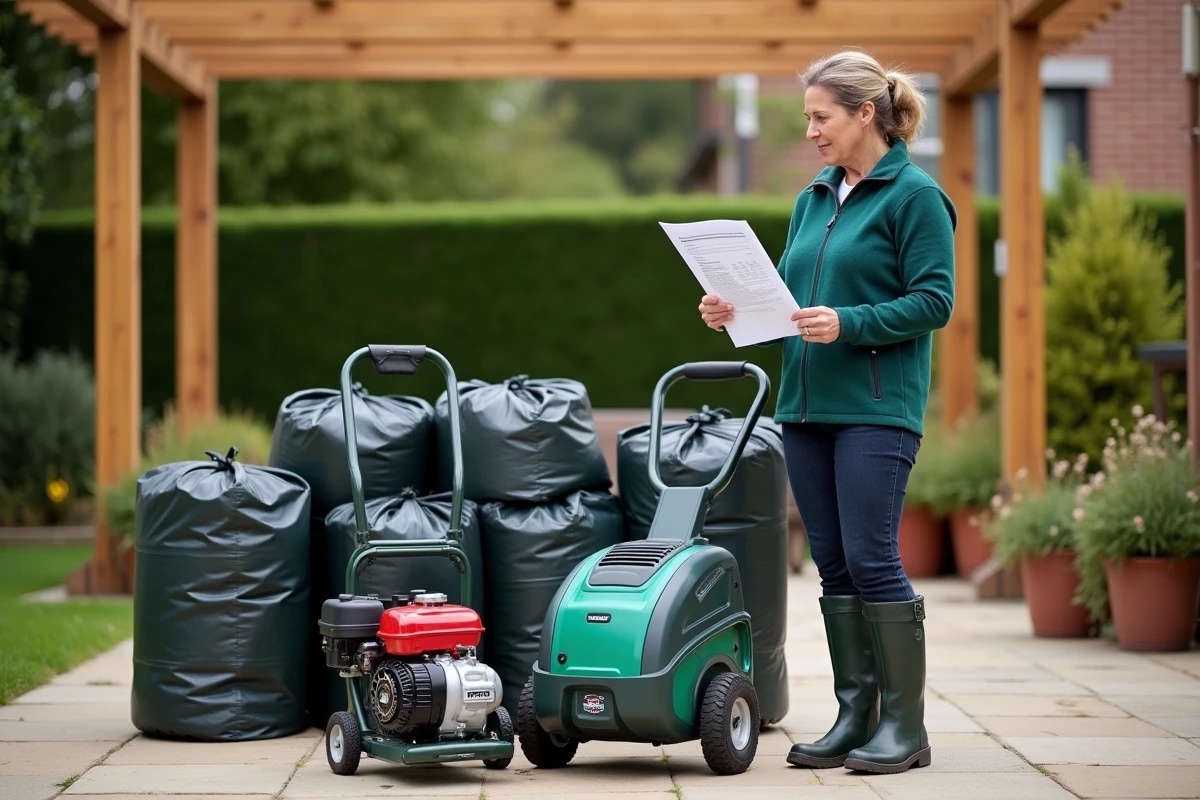
Adapting the choice of shredder to the intended valorization avoids ending up with unusable mulch or an oversized device for simple hedge maintenance.
Maintenance and Durability of the Shredder
A well-maintained shredder retains its cutting capacity for many seasons. The blades or knives should be sharpened or reversed regularly. On a rotor, reversible knives offer double the lifespan before replacement.
Turbine models require fewer interventions on the cutting components, but checking the drive system (belt, gears) remains essential. For a gas shredder, add engine oil changes, air filter replacement, and spark plug checks.
A rotor shredder with reversible knives represents the best compromise between cutting performance and ease of maintenance for regular domestic use. The choice of cutting system weighs more than the brand in the actual longevity of the device.