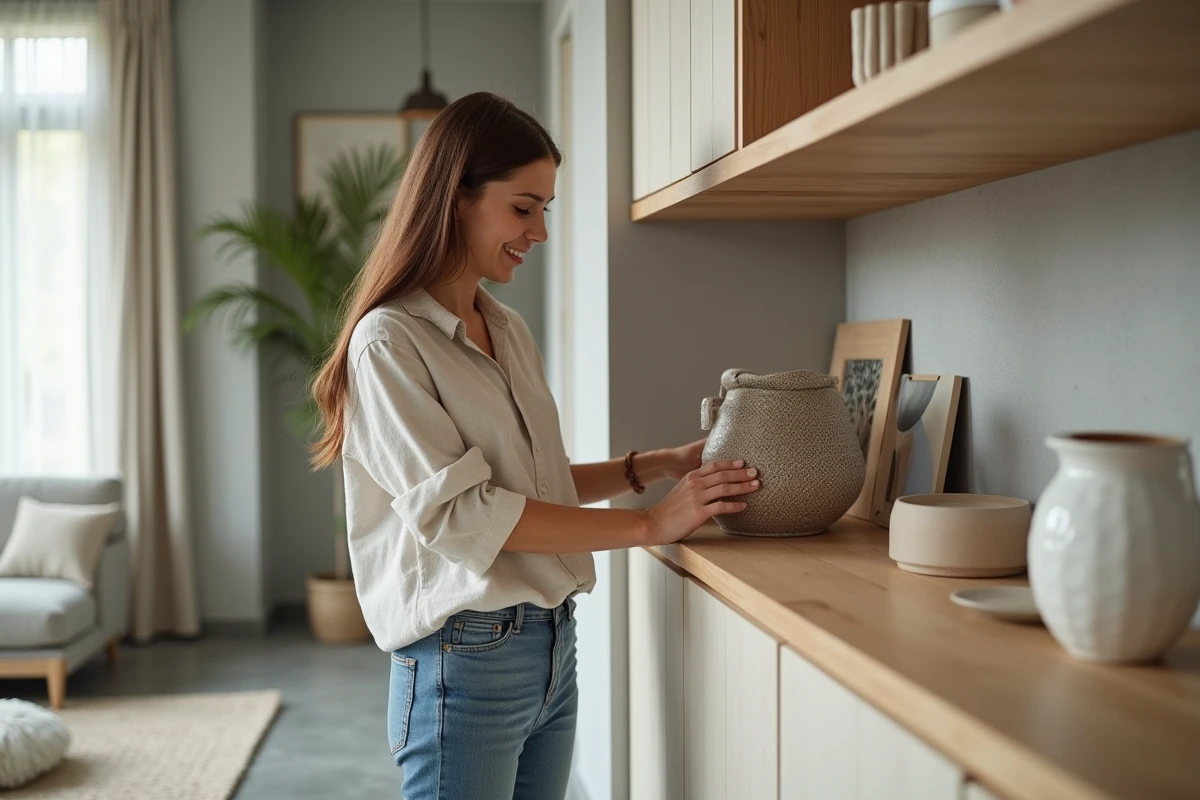
The choice of home equipment no longer solely meets aesthetic or economic criteria. Manufacturers now integrate modular features, often overlooked in favor of trends, even though they determine daily use. Some innovative materials, once considered fragile a decade ago, now display a robustness that surpasses traditional standards. Catalogs are filled with hybrid solutions, blending design and practicality, far from rigid layout conventions.
Understanding the keys to a trendy and functional interior: what to know before getting started
Thinking about interior design requires harmoniously articulating space, comfort, and lifestyle habits. The quest for space optimization is essential at every stage, influencing furniture choices and home organization.
Here are some options that make all the difference:
- A multifunctional piece of furniture that combines storage and style in the living room while facilitating movement around it.
- In the bedroom or master suite, a storage bed or a headboard with niches are valuable allies for order and visual unity.
Every decision should serve the ergonomics of the space. Investing in modular furniture, storage tips, or freeing up large areas ensures practicality for all daily uses, from the kitchen to the bathroom. The harmony of colors, the durability of materials, and thoughtful lighting directly contribute to the feeling of being at home. It’s about creating a flexible space, ready to adapt to your lifestyle rhythms and anticipate your needs, down to the smallest details.
The layout deserves to be considered room by room: simple lines, formats adjusted to the configuration of the space, easy-to-move or compact furniture. A narrow sideboard, a modular table, or a wall-mounted wardrobe optimize without overwhelming the space and contribute to the overall coherence. To go further, the equipment on Tip Top Déco et Maison brings together a range designed to combine aesthetics, practicality, and advice tailored to each context. The approach is not limited to the object but aims for a global balance, from the living room to the bathroom.
A relevant layout is based on the reality of daily life: smooth circulation, natural light, evolving solutions. Striving for coherence means embedding each choice in durability and accuracy.
What styles and materials to prioritize to combine aesthetics and practicality in daily life?
Far from fighting for a fleeting trend, choosing a style in interior design means creating a coherent environment that carries your signature and facilitates daily life. Minimalist lines appeal with their simplicity: a limited color palette, simple shapes, furniture that knows how to be discreet while remaining within reach. The Scandinavian style highlights light tones, natural materials, and creates a soft atmosphere conducive to relaxation. The industrial effect, on the other hand, asserts itself by introducing metal and steel, provided it is balanced carefully to avoid coldness.
The materials you select set the tone for your decor and determine its durability. A certified solid wood establishes a solid and timeless base in living areas. For the kitchen or workspace, recycled metal combines strength and ease of maintenance. Glass, present on a table or a lightweight partition, captures light and visually enlarges the space. As for fabrics, natural fibers like linen, organic cotton, or velvet stand out for their softness and durability.
To navigate these multiple choices, keep these principles in mind:
- Favor a palette of subdued colors to create a calming atmosphere: pure white, beige, soft gray, light greens.
- Opt for proven materials: certified wood, tempered glass, recycled metals, environmentally friendly textiles.
- Select items that combine aesthetics and utility, so that each element contributes to everyday life.
A truly functional decor stems from the simplicity of lines and the quality of assemblies. Seeking the advice of specialists helps avoid missteps and ensures visual unity. Let natural light interact with well-distributed lighting to enhance materials and colors, subtly balancing utility and visual pleasure.

Concrete tips for choosing home equipment without making mistakes
Choosing your sofa is often where it all begins when furnishing a living room:
- A corner sofa structures the reception area, while a convertible model is essential in a studio or for occasional guests.
- To extend this modular spirit, opt for coffee tables with niches or nesting tables, to be arranged as needed.
A well-thought-out interior also relies on hanging furniture or wall shelves. Whether your kitchen is L-shaped or custom-designed, these solutions free up the floor and facilitate movement while providing additional storage. Installing a mobile central island gives a fresh breath to the room: it serves as both a workspace, a convivial dining area, and a gathering point.
In sleeping areas, prioritize a storage bed or a storage bench to store without overwhelming. A low sideboard or an open bookshelf can structure a living room, while wall cabinets optimize daily management.
Every detail has its purpose: a rug that sets the scene, a light fixture to refine the ambiance, a mirror offering a beautiful sense of volume, not to mention cushions and throws for softness. Nothing is left to chance, but nothing is excessive: balance is key, and sometimes it comes down to small details.
Thus, the identity of an interior that combines harmony, ingenuity, and warmth of life is affirmed. True art is not about following trends but about shaping a space true to your desires, with each piece of furniture and every nuance becoming part of daily life.