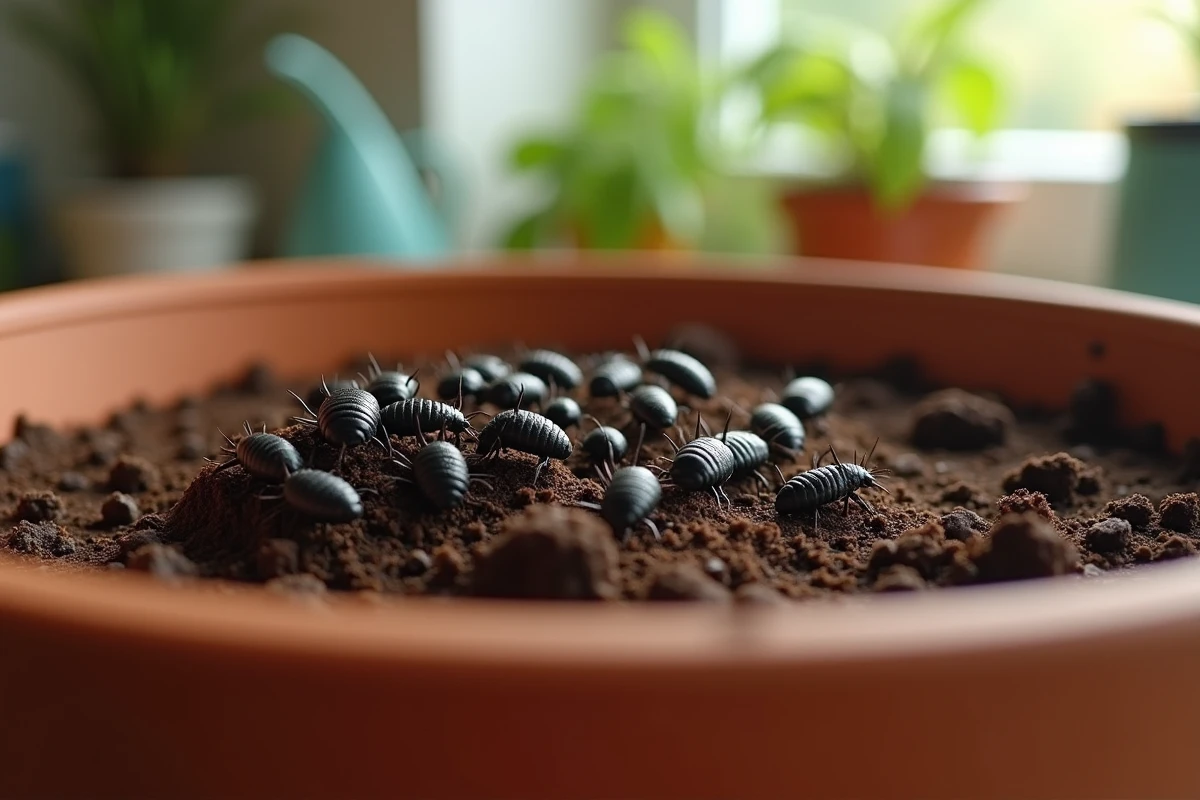
The black springtails of the genus Hypogastrura are not insects. These primitive hexapods, classified in a distinct branch of arthropods, inhabit environments where relative humidity exceeds a critical threshold. Their presence indoors indicates a hygroscopic imbalance that no surface treatment will correct sustainably.
Black springtails and structural humidity in new homes
An infestation of black springtails in a recent construction is never trivial. Unlike white species, which are more tolerant of dry environments, Hypogastrura specifically proliferate in areas where moisture remains trapped. The comparative study from the University of Montreal on domestic arthropods (February 2026) confirms that newly insulated homes concentrate these black species due to residual moisture trapped in the materials.
We observe this pattern repeatedly: concrete slab poured less than two years ago, poorly ventilated crawl space, poorly installed vapor barrier. The springtails rise through technical ducts, plumbing passages, and expansion joints. Treating the arthropod without correcting the defect is like mopping up a leak without turning off the tap.
When black springtails in the house appear in numbers in the weeks following the delivery of a home, we recommend a hygrometric diagnosis of the foundations before any other intervention. An abnormally high moisture level in the slab or buried walls points to a peripheral drainage issue or failing waterproofing.
Diatomaceous earth and horsetail manure: application protocols against springtails
Since January 2026, regulation (EU) 2025/2789 prohibits the use of synthetic pyrethroids indoors against springtails. This ban makes natural alternatives not only preferable but mandatory for domestic treatments.
Diatomaceous earth: targeted use in passage areas
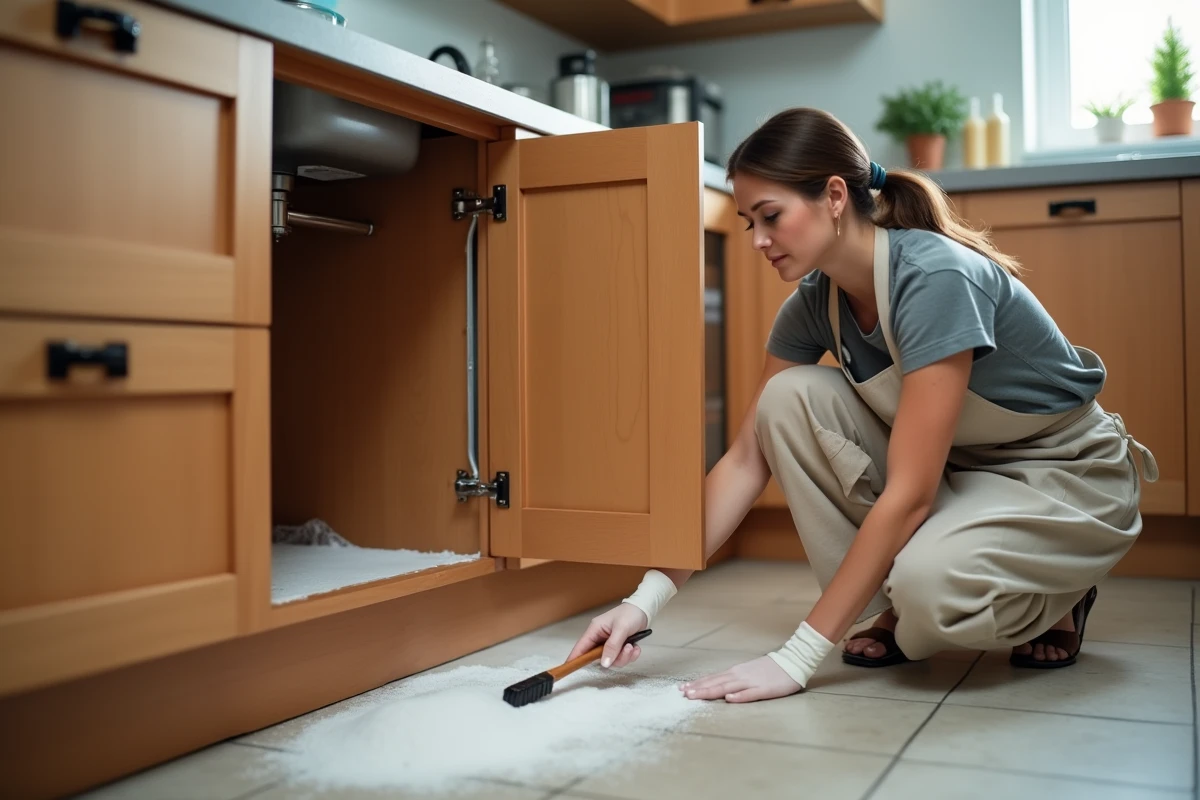
Diatomaceous earth works by mechanical desiccation, abrading the waxy cuticle of springtails. Its effectiveness entirely depends on placement and the dryness of the substrate. When applied to a damp surface, it loses all abrasive capacity within a few hours.
- Sprinkle a thin layer along baseboards, around bathroom drains, and under furniture in contact with the floor, only on dry surfaces
- Renew the application after each wet cleaning or in case of visible condensation
- Prefer food-grade diatomaceous earth (non-calcined), which is less irritating to the respiratory tract
Horsetail manure: a field-tested repellent
The technical bulletin from the French Beekeepers Federation (April 2026) reports that horsetail manure spray significantly reduces springtail colonies within a week, without toxic residues. The silica contained in horsetail disrupts the molting of springtails, which molt throughout their lives, unlike conventional insects.
The protocol involves spraying diluted horsetail manure on infested areas (around plant pots, window sills, basements) every three days for two weeks. Horsetail manure works both preventively and curatively on established populations.
Drying out infested areas: effective actions
Black springtails depend on a film of water to breathe through their cuticle. Removing this moisture eliminates them more reliably than any biocide.
- Ventilate humid rooms (bathroom, laundry room, basement) with a functional mechanical ventilation system, checked mouth by mouth – insufficient airflow at a single outlet is enough to maintain a colony
- Remove saucers under indoor plant pots or empty them systematically after each watering
- Space out watering of potted plants: the potting soil should dry on the surface between waterings
- Fix leaks, even minor ones: a degraded silicone seal around a bathtub creates a microclimate sufficient for hundreds of springtails
An electric dehumidifier in rooms below ground level speeds up the process. We find that below a certain threshold of relative humidity, populations collapse within two to three weeks without further intervention.
Black springtails in garden soil: should they really be eliminated outdoors?
Outside, the question arises differently. Springtails contribute to the decomposition of organic matter and the fungal regulation of the soil. The annual report from INRAE on urban bio-indicators (March 2026) notes an increase in urban infestations since 2024, linked to increased lawn watering during prolonged heatwaves.
Eliminating springtails in the garden amounts to removing a link in the decomposition chain. We recommend focusing efforts on the immediate perimeter of the house: a dry strip of at least 30 centimeters around the foundations significantly limits intrusions. Draining gravel, absence of organic mulch in direct contact with the wall, gutters directed away from the foundations.
The real lever remains water management. Properly draining soil, foundations protected by a waterproof coating, a ventilated crawl space: these elements make occasional natural treatments much more effective and, above all, sustainable. Black springtails are not the problem; they are the symptom.